Day 2 • 11:30 R3
Harness OSINT:用 Python 讓 AI agent 駕馭寫不出 spec 的任務
SecurityChinese (English slides)

Kevin Tseng

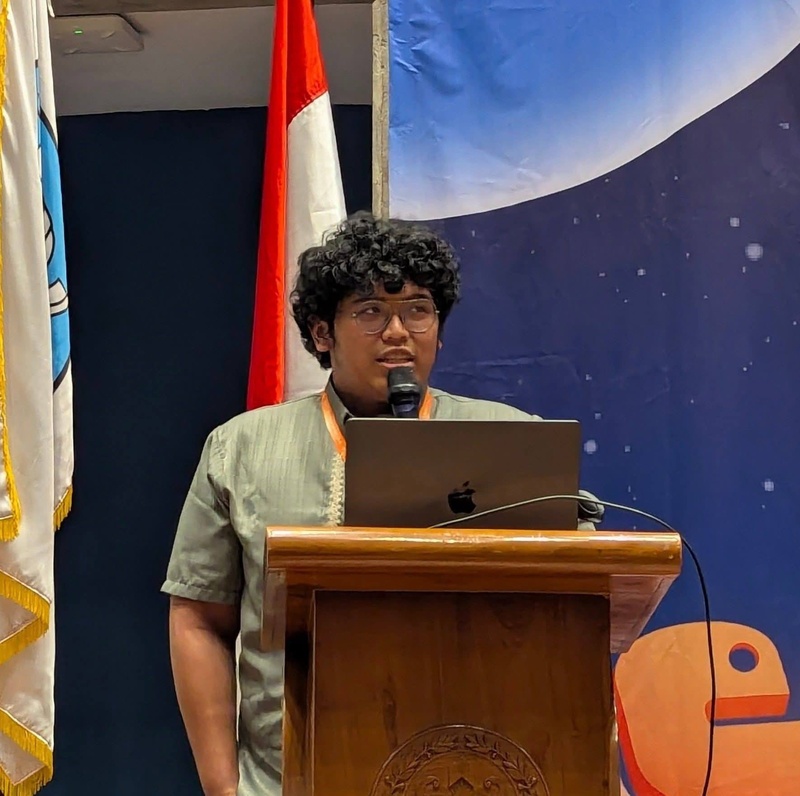
Cyrus Mante
Most developers treat their LLMs like trusted colleagues. They prompt, deploy, and hope for the best. But trust is a vulnerability. This talk takes an engineer's approach to AI red-teaming: systematically finding, documenting, and fixing the ways your language models fail before your users or adversaries do. We'll cover a practical taxonomy of LLM failure modes (prompt injection, jailbreaks, sycophancy, data extraction, hallucination under pressure), then build a red-team testing harness live in Python using garak, deepteam, and deepeval. These aren't theoretical failure modes — they're vulnerabilities I've found in production RAG pipelines and chatbots using exactly this workflow. No prior security background needed, just Python and a healthy distrust of your own models. You'll leave with a repeatable methodology and a toolkit you can run on your next LLM-powered application tomorrow.
Most LLM applications are tested for what they should do, not for what they can be made to do. Red-teaming flips this: instead of asking "does it work?", we ask "how does it break?" This talk brings an engineer's systematic approach to a problem most Python developers handle ad-hoc, if at all.
Red-teaming borrows from cybersecurity — a structured adversarial exercise where you attack your own system to find weaknesses before others do. Applied to LLMs, this means probing for:
A lightweight red-team harness in Python using:
garak — LLM vulnerability scanner; generates adversarial probes at scale across jailbreaks, prompt injection, data extraction, and moredeepteam — purpose-built LLM red-teaming framework; runs attacks against your application, scores outputs against OWASP Top 10 and NIST AI RMF-aligned vulnerability metrics using LLM-as-judge, and produces a structured risk assessmentdeepeval — LLM eval framework; layers in general quality scoring (relevancy, faithfulness) to distinguish security failures from general quality degradationTogether these form a complete workflow: probe generation → attack execution → dual-layer scoring → structured report → regression test cases.
A repeatable methodology and working Python toolkit to stress-test any LLM application. This workflow has surfaced real vulnerabilities in production RAG pipelines and chatbots — findings that would never have appeared in a standard capability eval. Starting the day after the talk.
Cyrus is an AI Software Developer within the AI Centre of Excellence with a background in data science and machine learning. He works on agentic AI solutions that improve internal workflows and support the responsible adoption of AI across the organization by combining data-driven thinking with software engineering practices. Outside of his work, Cyrus stays active in the tech community through volunteering, community initiatives, and speaking engagements, where he shares practical insights on applied AI and modern software development.